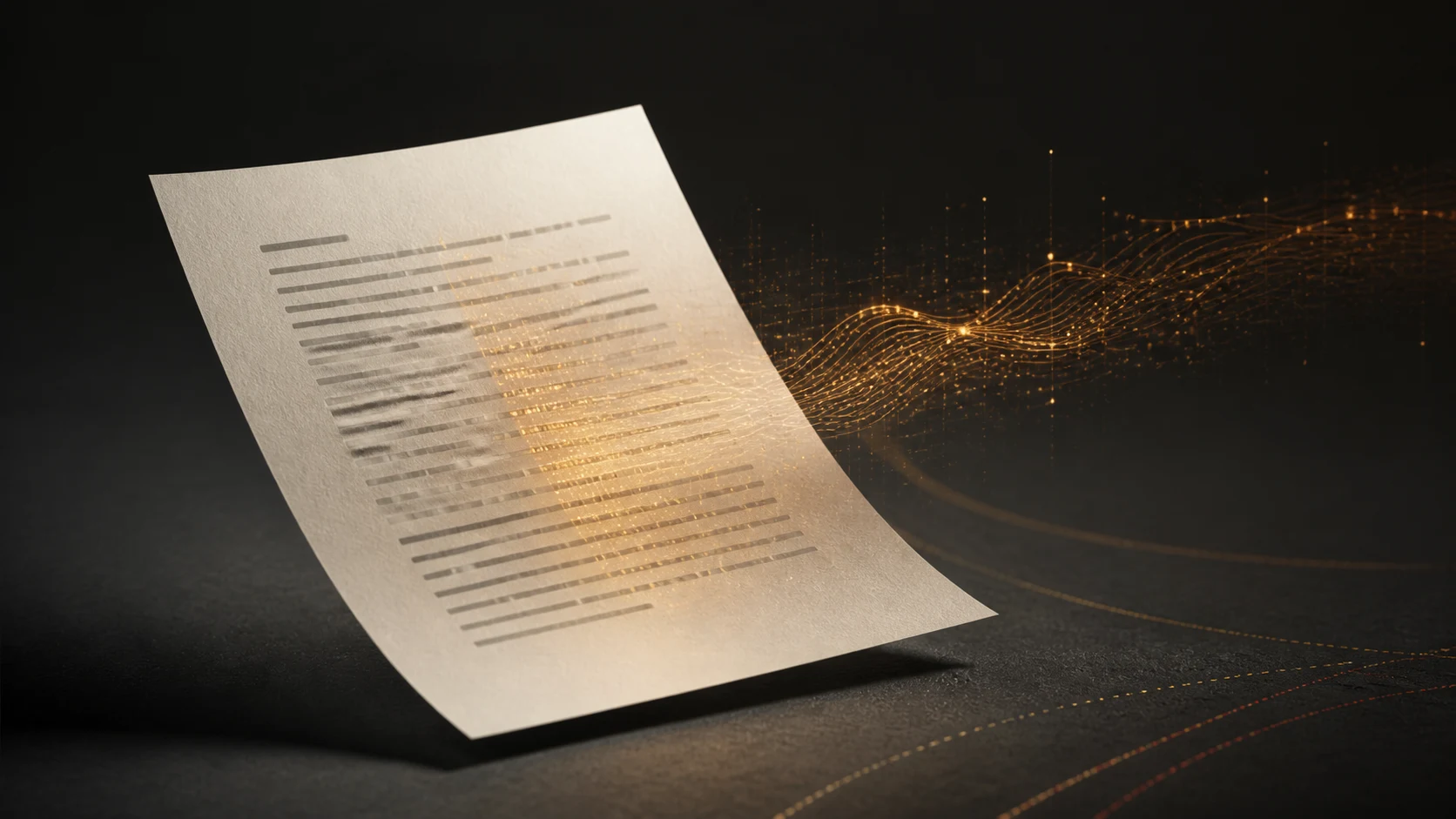
Anthropic has started adding machine-readable invisible watermarks to text and files produced by some newer Claude models. Unlike a visible image watermark, the mark is designed to let compatible systems identify that Claude generated or processed the content.
What changed?
The change focuses on newer models launched in the EU after August 2. Anthropic says the marks will be used wherever those Claude models are offered, rather than being limited to EU users. Text and files use different machine-readable forms.
The move responds to the transparency requirements in Article 50 of the EU AI Act, which calls for AI-generated or substantially manipulated content to be identifiable. Anthropic is shifting disclosure from a user’s statement toward a technical signal in the content itself.
It is not a foolproof AI detector
The mark cannot answer whether an entire article was written by AI. A human draft sent to Claude for proofreading, translation, or formatting may still receive a mark. Heavy rewriting, mixed human text, or very short passages can also make the mark harder to identify.
What it means for users
Students, companies, and content teams will need to distinguish using AI from having AI write everything. Version history, human review, source records, and an author’s disclosure still explain the production process better than one detector result.
For Anthropic, this is an early step toward building transparency rules into product output. For users, it means routine proofreading or translation may leave a trace that people cannot see but systems can read.
Treat it as a signal, not a verdict
Claude’s invisible watermark is worth watching, but the accurate interpretation is a signal about provenance and processing—not an authorship detector. Reliable decisions still need context, version history, and human review.